manufacture Laser Machine
Whatsapp or Wechat, +86 180 3888 2034



» Sandblasting Machine » Glass Automatic Horizontal Sandblasting Machine
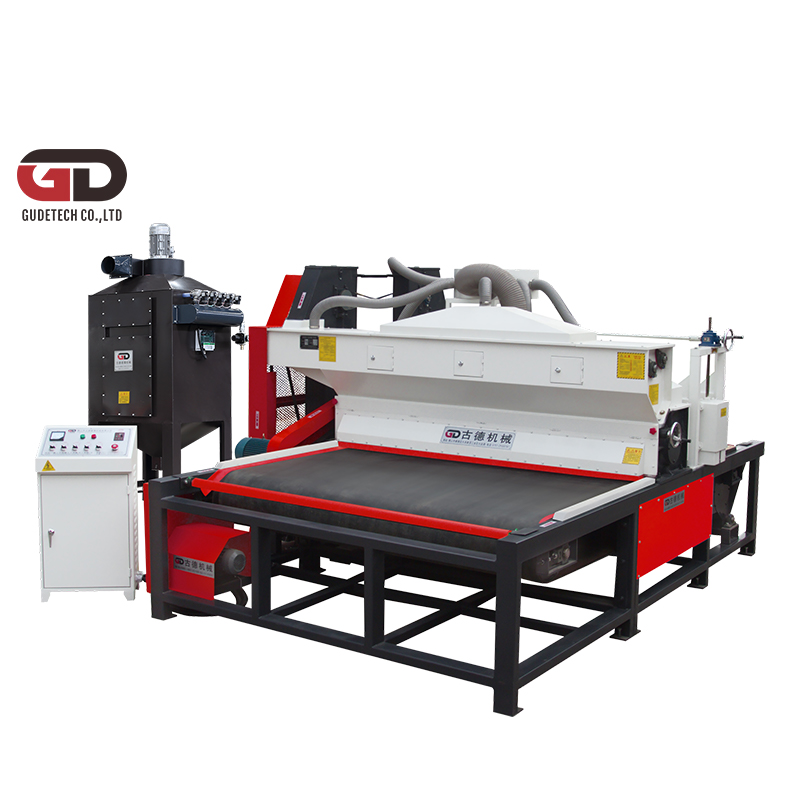
Glass Automatic Horizontal Sandblasting Machine
Full automatically, improving working environment and reduced labor intensity. Due to greatly reducing production cost, the machine has been accepted and selected by the majority of customers!
Scope of application: This machine is suitable for sanding the surface of glass, acrylic, stone, ceramic, metal and other materials.
enquiry- Specifications
Glass Automatic Horizontal Sandblasting Machine
- Function: Full-automatic glass sandblasting machine contains of dust collecting--sand sweeping--transportation--grit feeding--sandblasting--sound attenuation--grit filtration--grit equalization--grit storage--shakeout. Each production process section is completed automatically.
- Features and Advantages:
1. The main blade shaft is dynamically balanced by the overall high-precision dynamic balancing machine equipment. Our company is the only one in the industry that has an overall dynamic balance ability;2. The main blade shaft is made of solid high-density steel, namely 40Cr. Made by initial rolling, quenching and tempering heat treatment, static rolling, and precision grinding, which has a larger diameter than other normal sandblasting machine, with a diameter of 70mm for model 1300 to 1600, 80mm for model 2000-2200, 110mm for model 2600;3. Dual sand lifting tower with filter, incase sand block;4. Long black conveying belt, which is convenient for conveying big sheet of glass. The conveyor belt adopts integral seamless wear-resistant rubber belt and frequency conversion speed regulation, which greatly reduces the glass scratches during the production process. Thickened material, with a service life of over ten years;5. There are three working positions at the feeding section, which is convenient for workers to operate;
6. Dust removal cloth bag is artificially sewn by new fabric brushing, which is more durable and has a better dust collection effect. Dust sand bag qty: 16pcs
7. Can select the electronic pulse dust collector, adopts four new upgraded and enlarged filter elements, which have better dust removal effect. The electronic pulse device automatically taps the filter element every 10 seconds, causing dust to automatically fall to the bottom. Automation replaces manual operation, reducing labor costs and extending the service life of the equipment.
- Specifications & Parameters
| Model | Machine size | Max. glass width | Max processing capacity
㎡/Hr |
Loading CBM | Weight |
| GDS-1300 | 3000×2200×2000mm | 1200mm | 50.4 | 11.2 | 1800kg |
| GDS-1600 | 3000×2500×2000mm | 1500mm | 63 | 13.3 | 2000kg |
| GDS-2000 | 3500×2900×2000mm | 1900mm | 79.8 | 15 | 2400kg |
| GDS-2100 | 3500×3000×2000mm | 2000mm | 84 | 15.5 | 2450kg |
| GDS-2200 | 3500×3100×2000mm | 2100mm | 88.2 | 16 | 2550kg |
| GDS-2600 | 3500×3500×2000mm | 2500mm | 105 | 17.7 | 2800kg |
Enquiry Form
Maybe you like also
Copy©2017 | Gude Laser.